
Have the conversation nobody has.
Most founding teams split equity with a handshake and a spreadsheet, then discover what they actually agreed two years later. Pie Divide turns it into a structured negotiation everyone signs off on — and leaves you a record you can point at.
A full trial run on our standard weights. No card required.
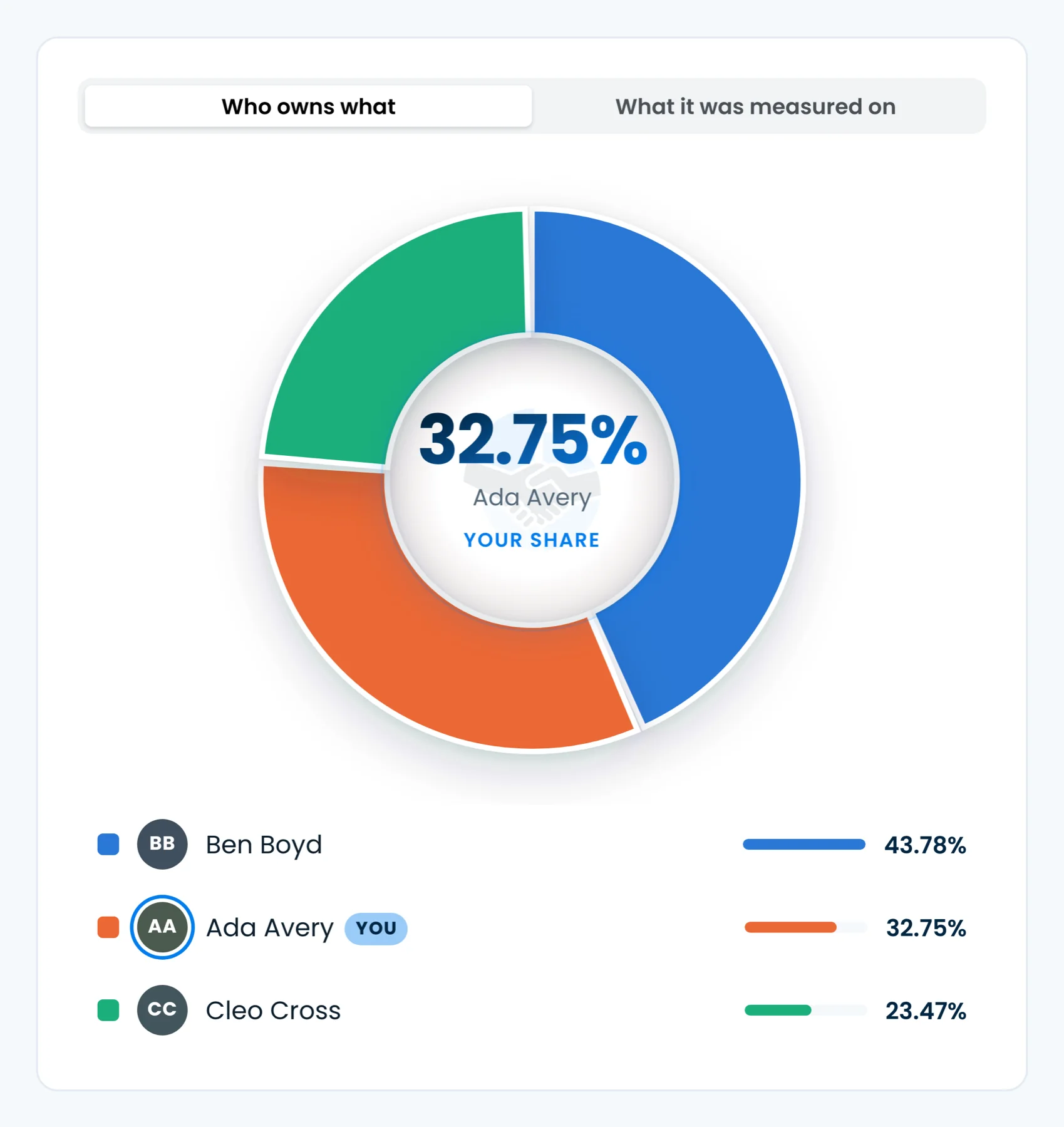
The hard part was never the arithmetic
Teams get the sums right and the conversation wrong. The split gets avoided, settled quickly to keep the peace, and never revisited — and the number one person quietly resents is the one still on the cap table years later.
founding teams divide their equity equally, across 1,476 founders in 511 ventures.
the value the same study estimates is at stake in that one decision — around 10% of the firm, or a quarter of the average founder’s stake.
followed for six months: whether the split was felt to be just— not how large anyone’s share was — predicted whether the team spiralled upward or downward.
Breugst, Patzelt & Rathgeber, Journal of Business Venturing 30(1)
Four steps, and nobody can skip one
Every stage needs everyone. That is the point — the structure is what makes the outcome hold.
Agree what matters
Negotiate the weight of each contribution — idea, capital, execution, sales — before anyone sees a number attached to their name. Propose a change, say why, and nothing moves until a co-founder accepts it.
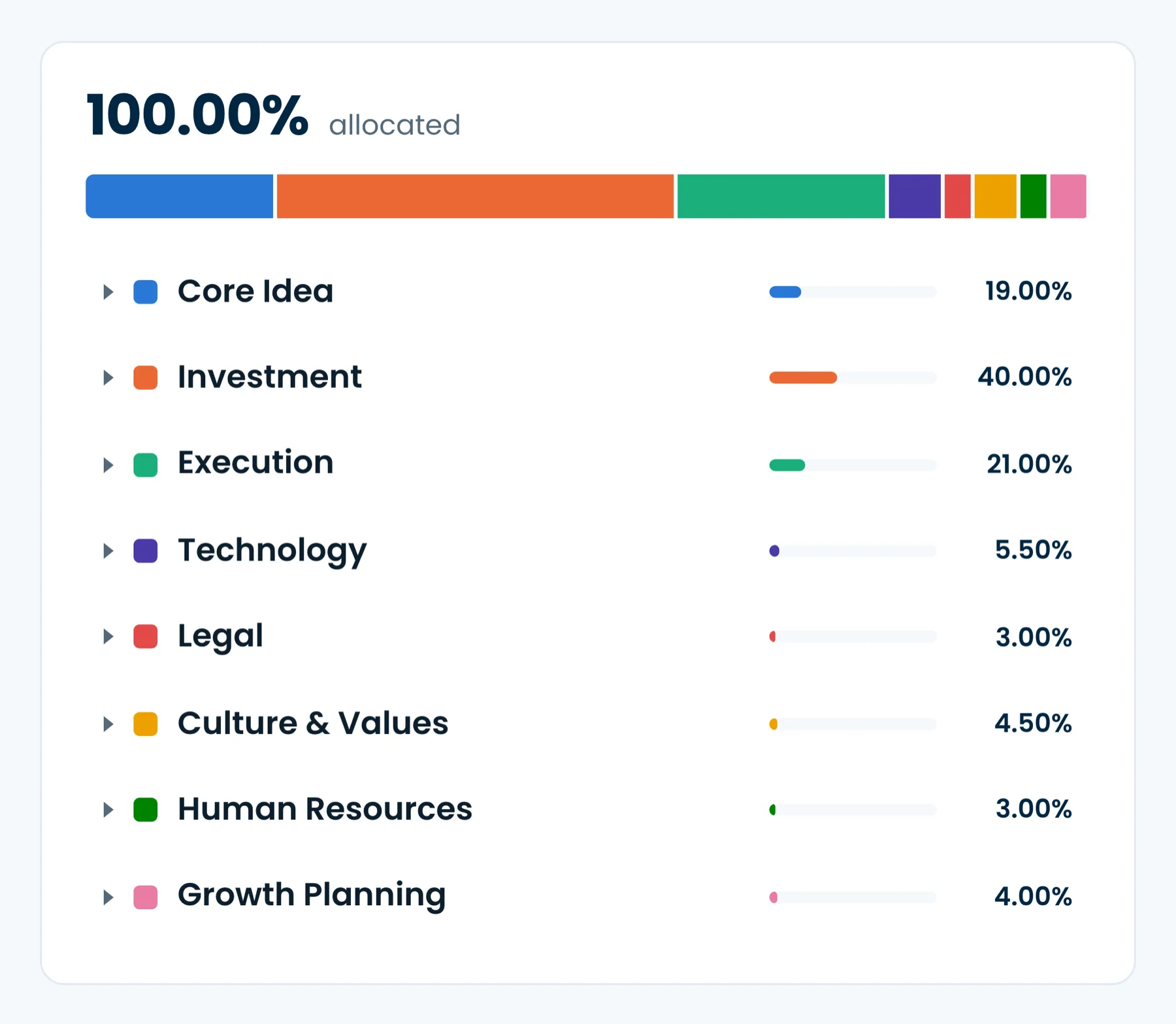
Assess each other
Everyone scores themselves and every co-founder, privately, on the dimensions you agreed. Nobody sees anyone else’s answers while they work — and a 1 means “contributed nothing here”, not a polite low mark.
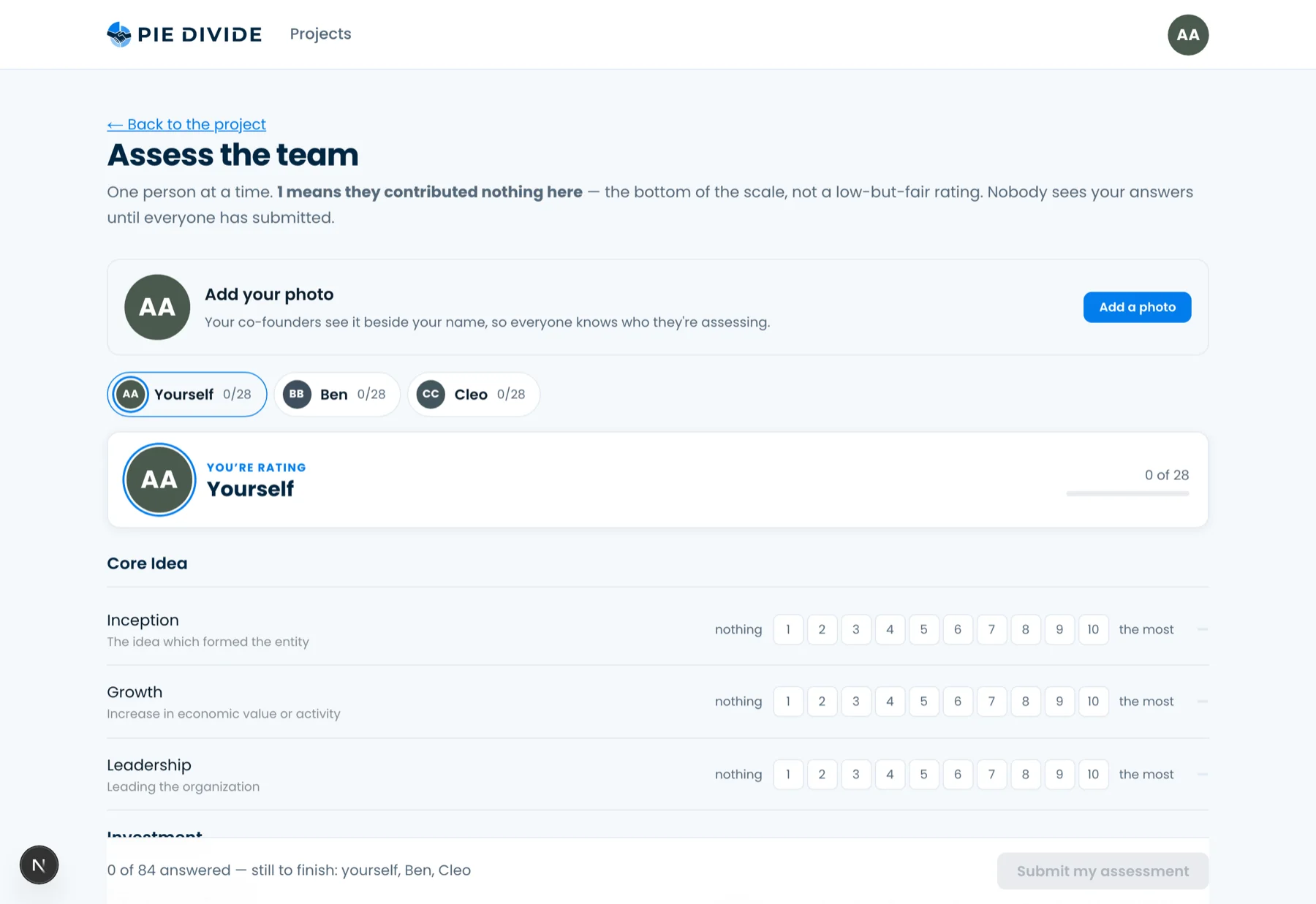
See the split
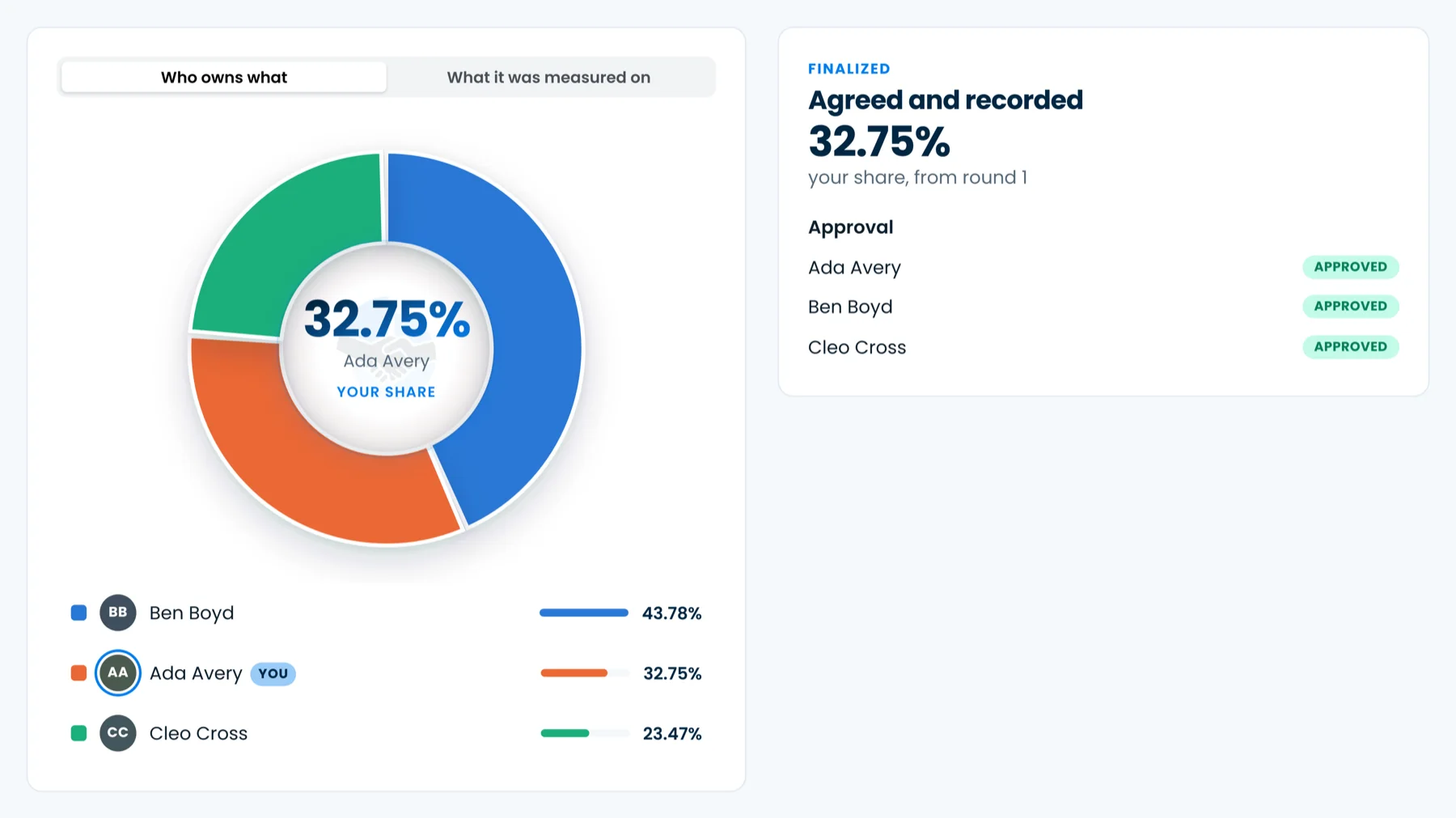
One result, computed from everything submitted, with the contribution of each category shown openly rather than as a black box. You can see which categories produced whose share.
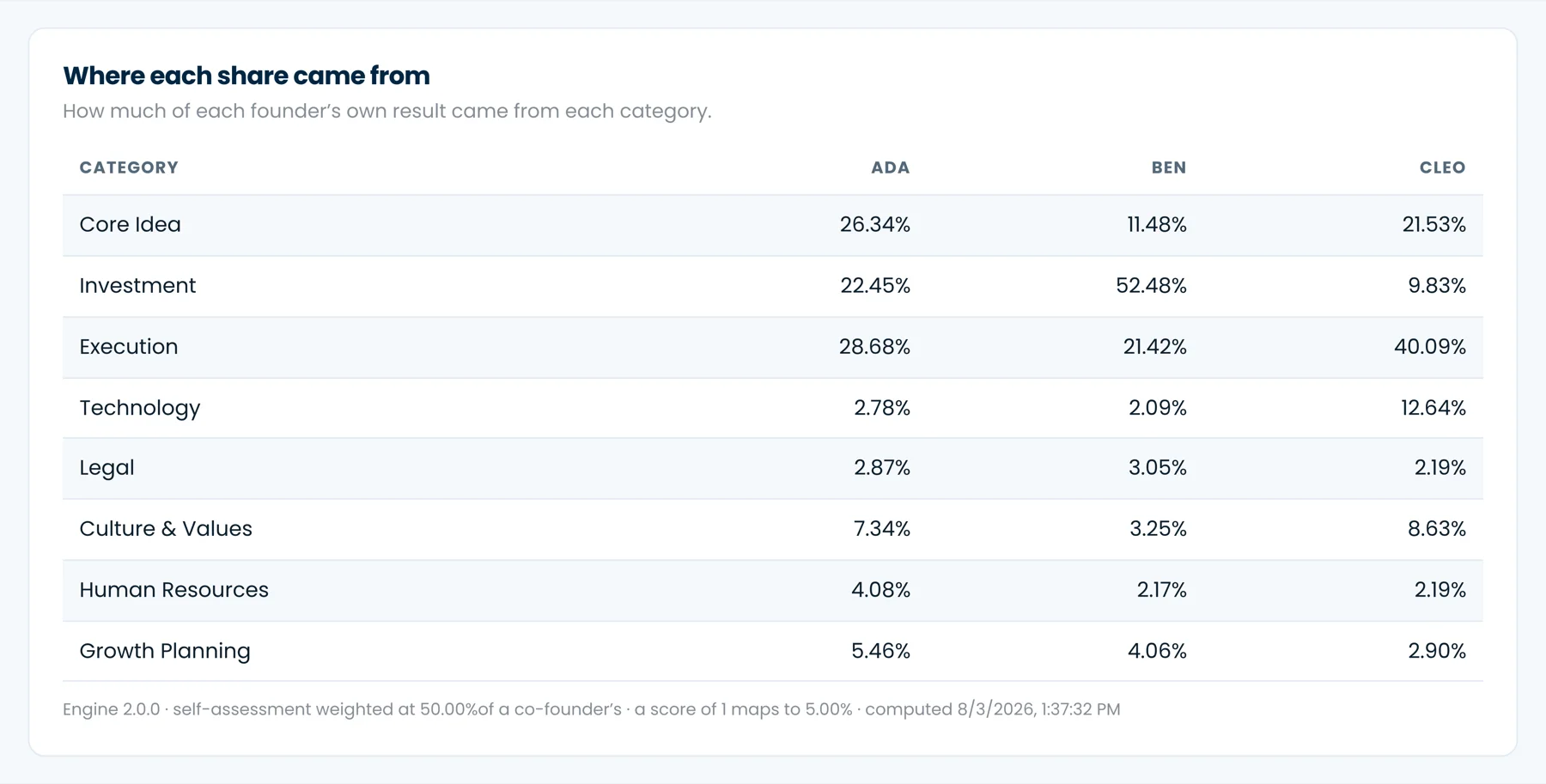
Approve it together
It is not final until every founder approves. Anyone can dispute and reopen the round — with the previous result kept intact, so a reopened question starts from what you had rather than from nothing.
That is the whole process
Run all four phases with your real co-founders, free, on our standard weights.
A calculator gives you a number. This gives you an agreement.
The difference shows up on the day someone disagrees with what was decided.
A free equity calculator
- One person, one browser tab
- You rate yourself, with nothing to counterweight it
- Nothing is saved when you close the tab
- No record of who agreed, or when
- Reopening the question starts from zero
Pie Divide
- Every founder takes part, from their own account
- Peer assessment counts for more than self-assessment
- Weights are negotiated and approved before scoring begins
- Unanimous approval, with a timestamped record of it
- Dispute and re-run a round, with the previous result kept beside the new one
Built so it can’t be gamed
Three decisions that make the result something a team can actually live with.
Your own score counts for less
Rating yourself a ten cannot outvote what your co-founders think.
Change a weight, lose the approvals
Nobody is ever recorded as agreeing to numbers they did not see.
The result is fixed once computed
A finalized split is stored, not recalculated from whatever the weights say later.
The paperwork does not do itself
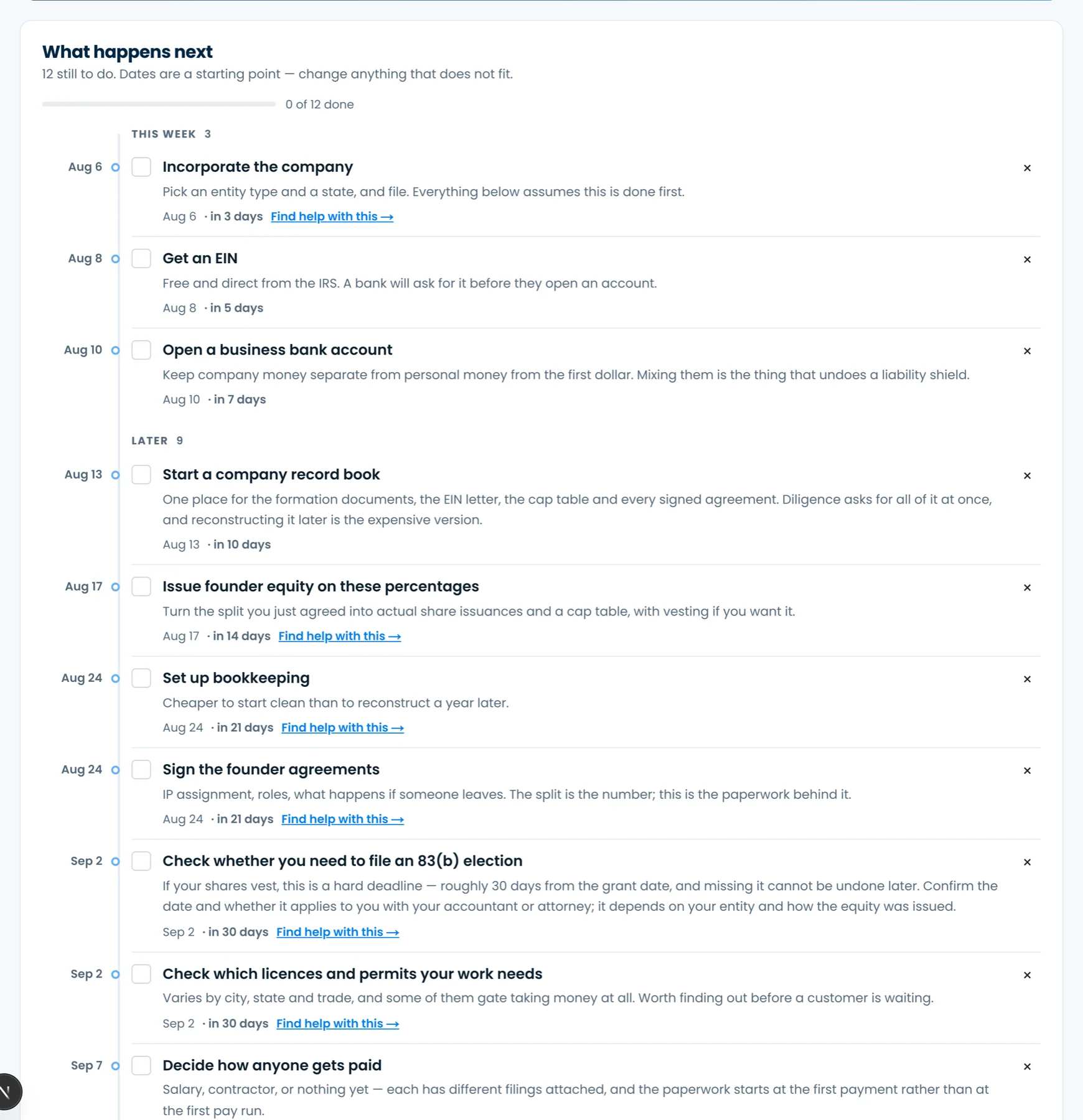
Finalizing puts a dated checklist in front of the team: incorporate, EIN, bank account, the 83(b) window, founder agreements. What every new company has to do is already on it. What only applies to some is offered separately, so the list you open is short enough to read. Everything on it is yours to re-date, rename or delete.
Dates are a starting point, not advice about your situation. Deadlines vary by entity and state.
Not just venture-backed startups
Anyone going into business with someone else has to divide it. Most of them have never been offered a tool for it.
Startups
Pre-incorporation teams deciding the split before the lawyer papers it.
Agencies & studios
Partners whose contributions look nothing alike and never have.
Trades & construction
One partner brings the capital, another the crew and the customers.
Professional practices
Clinics, firms and consultancies splitting ownership among partners.
Now — not in year three.
Walk the whole process free to see whether it fits. Pay when you want it weighted around your own business — and only for the projects where that matters.